Duplicates and homonyms
Review identity evidence before merging records or proposing a split.
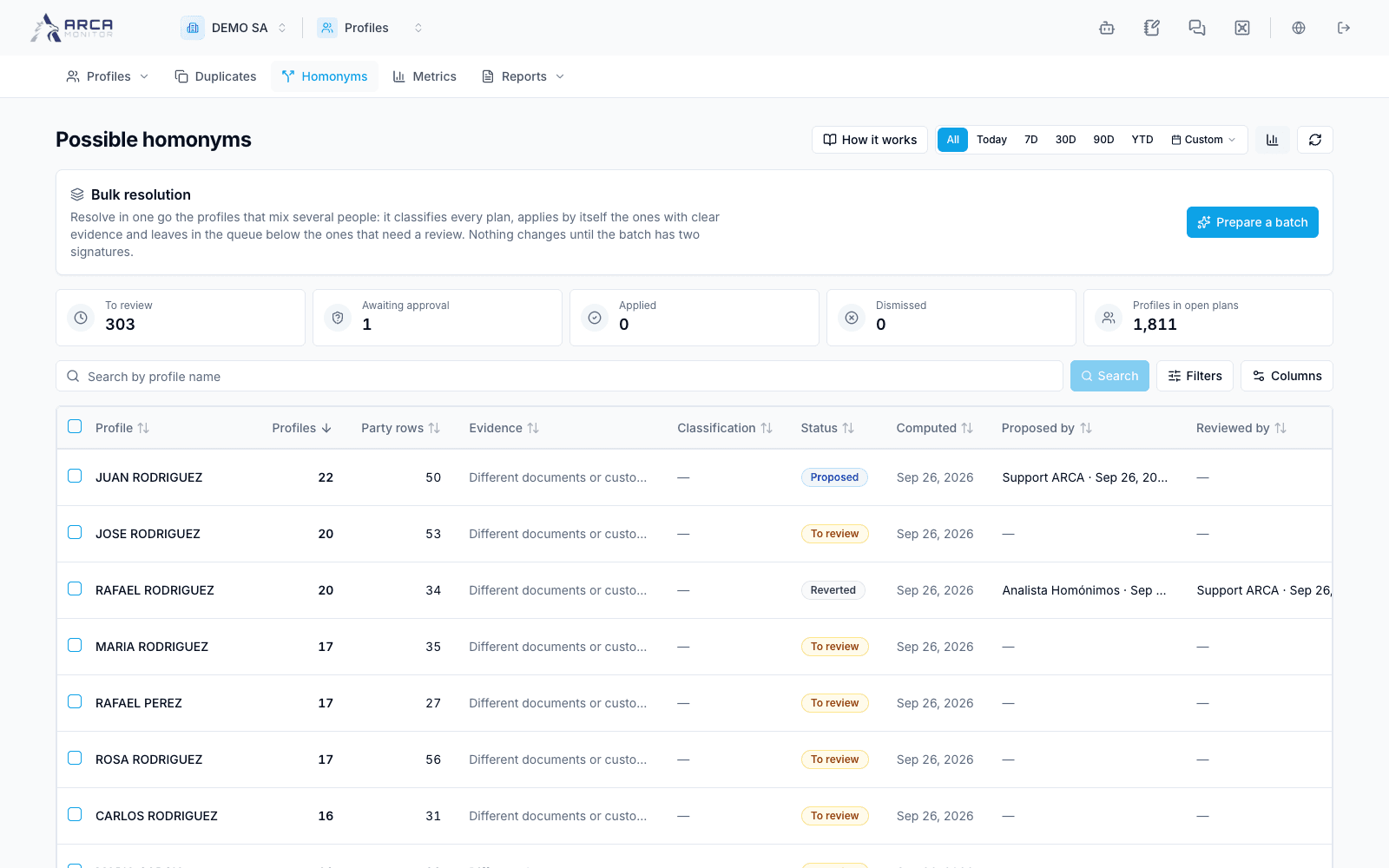
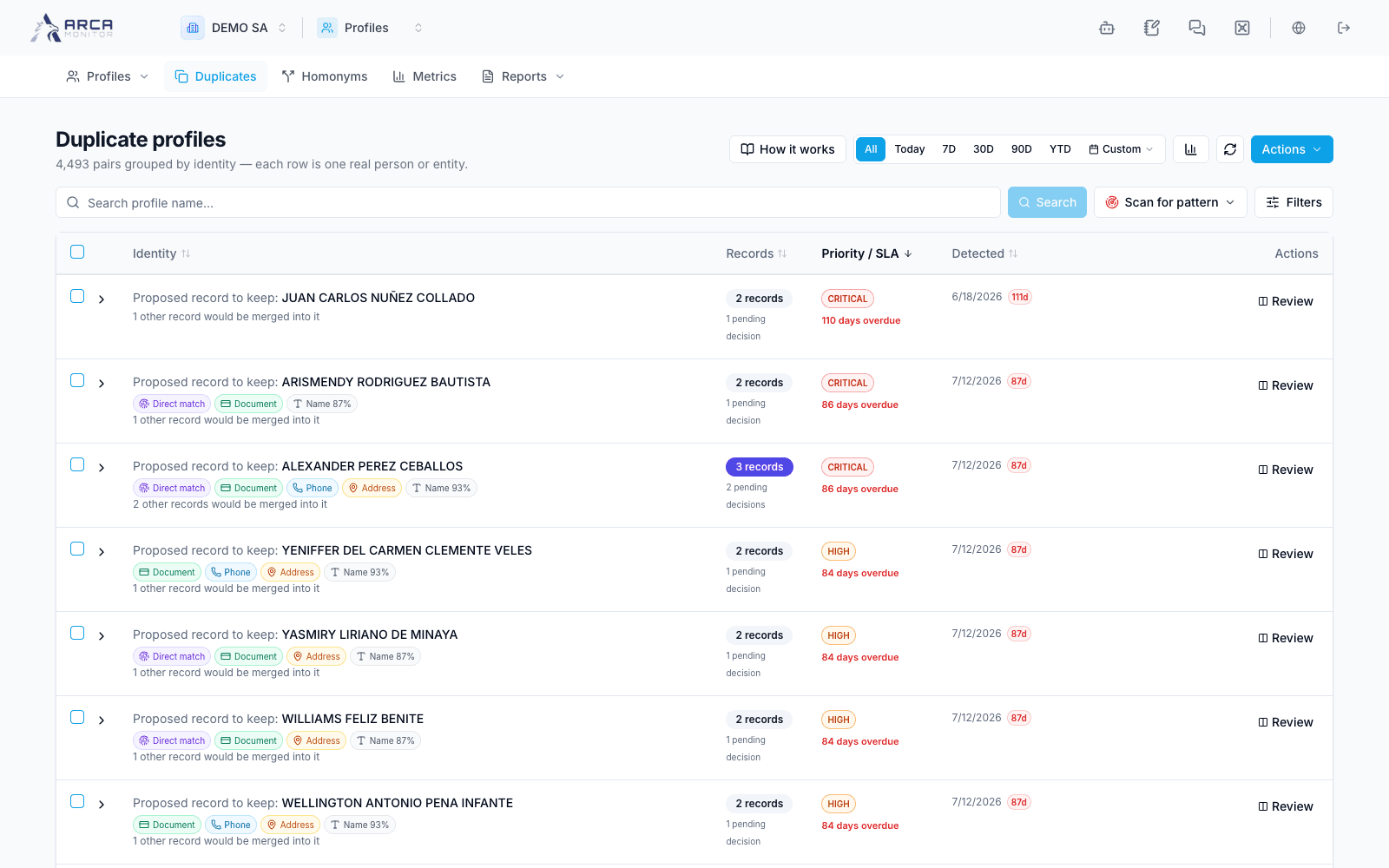
Open Duplicates for records that may represent the same identity. Open Homonyms when a record may contain activity belonging to different people. These workflows solve opposite identity problems; similarity alone cannot choose between them.
Review a duplicate group
- Open the candidate group and inspect every relevant record. Compare identification, dates, contact data, relationships, activity, and the evidence explaining the candidate.
- Choose the record to retain as the surviving identity. A suggested survivor is a starting point for review, not proof that its values are correct.
- Classify each other record as the same identity or a different one in the resolution panel. These choices are staged locally until you confirm the plan.
- Open the plan confirmation. Review the impact preview, transferred or retained records, field conflicts, and blockers for the chosen survivor.
- Resolve only supported field choices, provide the requested reason and notes, and confirm the plan when permitted.
- Read whether the result was executed or submitted for independent approval. Verify the surviving profile and the recorded outcome after completion.
Blocking findings can require resolving screening issues first. Findings that records represent different people or contain several people cannot be cleared merely by selecting a reconciliation option.
When another reviewer is required
The review dialog shows the proposed survivor, signed field choices, impact, and approval restrictions. An eligible reviewer reviews the actual plan and either approves it or returns it for correction where offered. A proposed merge does not mean that records have already been combined.
After execution, follow the surviving profile. Merged-record notices and source labels preserve the context of absorbed records, contacts, activity, and history. Do not interpret inherited historical evidence as a new assessment performed on the survivor.
Review a homonym plan
Open the plan and examine the proposed person groups, source rows, and impact on transactions and related work. Confirm that evidence supports separating identities rather than merely correcting a spelling.
A reviewer proposes the split; a different authorized user approves it. The split runs in the background. Follow applying, applied, or failed and inspect the application report. Approval alone is not proof that the split finished.
When the evidence instead indicates the same person, use the available dismissal workflow with an explanation. Withdrawal and reversal are separate actions with their own permissions and valid states. An applied split can offer reversal, but review its current impact and reason requirements rather than assuming it is an unrestricted undo.
If the evidence is inconclusive
Keep the uncertainty explicit and hand off the group or plan reference with the unresolved evidence. Do not merge records to clear a queue counter. If a plan fails or changes, reload its current state and impact before attempting another action.
Screens and controls
Duplicate review queue
Homonym review and split work